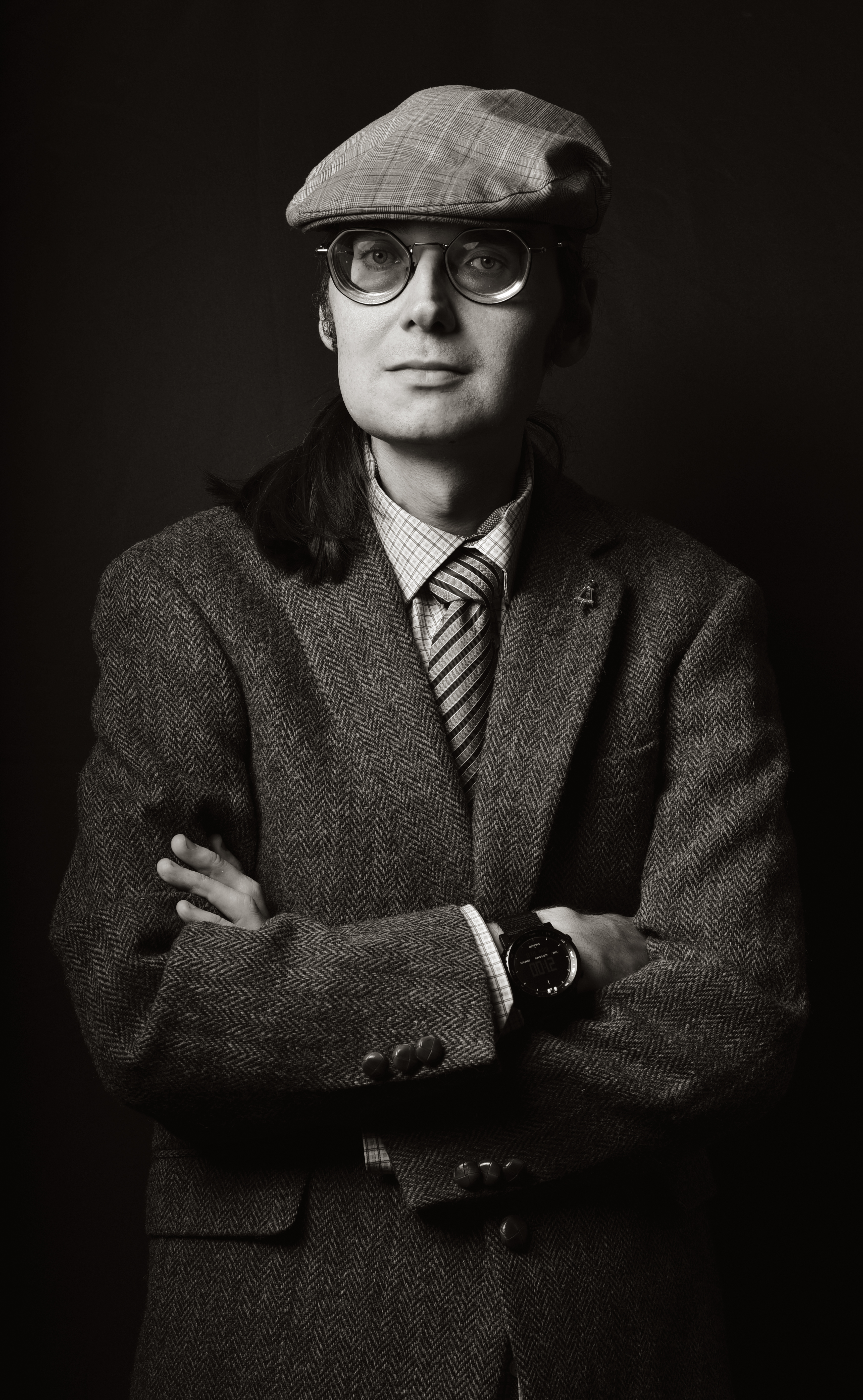
ECE Ph.D. Student
University of Michigan
District Director in District 7
MI-K ‘23 - WMIAC
Tau Beta Pi
Co-Founder and Admin
Darkn.Space
✉ sakhmatd -at- umich.edu
✉ sakhmatd -at- darkn.space (XMPP)
My name is Sergei. I am a doctoral student, pursuing a Ph.D. in Electrical and Computer Engineering (ECE) at the University of Michigan. I am advised by Robert Dick. My research interests lie on the intersection of embedded systems, Privacy-Enhancing Technologies (PETs), and AI/ML research. I am particularly interested in addressing the privacy challenges that would arise from ubiquity of AI-enabled wearable devices.
Previously, I did research in the fields of Computer Architecture and Advanced Sensors at Western Michigan University. I also have extensive experience as a tutor of college-level mathematics, computer science, and physics.
I am a long-time supporter of software freedom and computing minimalism. Aside from my software projects, my contributions to the free software community include work on the D programming language runtime and the FreeBSD operating system.
In my spare time, I enjoy film photograhy, board/video games, music, and bicycling/motorcycling.
While the Large Language Model as a Service (LLMaaS) paradigm provides scalable access to powerful models, the transmission of prompts from edge devices to cloud providers risks exposure of sensitive user information. Existing solutions attempt to mitigate these risks at the input level by altering specific tokens within prompts before they are sent to the cloud. However, this is impractical or fails entirely when inputs encode both task-relevant information and latent private features. We describe Unlearn-Then-Noise, a split-inference system that applies Differential Privacy (DP) noise directly to latent-space activations prior to transmission to the cloud.
Tele-operation has seen considerable use in aerospace and medical applications. However, contemporary tele-robotic systems rely exclusively on visual feedback. We propose a haptic feedback system that would allow operators to receive touch-based feedback, increasing their control and dexterity. To address the flexibility and range issues found in modern capacitive touch sensors, we design a custom multi-layered touch sensor with cone and porous structure.
Calculating power consumption, execution time, and resource utilization for FPGA designs created using High Level Synthesis (HLS) tools requires a complete place & route procedure, which can take weeks or even months for some commercial designs. We propose a fast, accurate, and generalizable machine learning model to predict these design characteristics, bypassing the lengthy setup time required.


